HeBA.One FOR INDIVIDUAL
Breathing exercises
Self-help guide
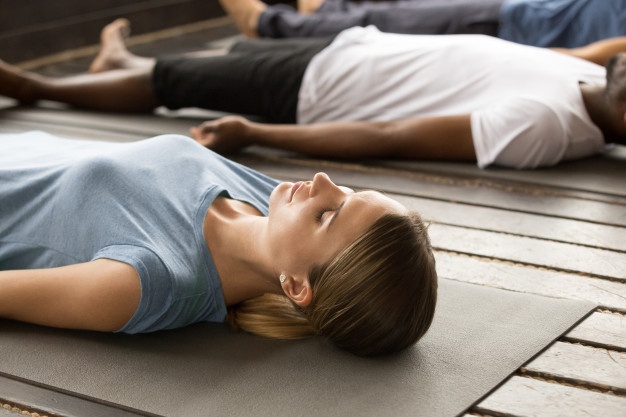
Self-help methods help you maintain and boost your mental wellbeing, feel relaxed, and reduce stress. There are many methods of self-help, and different methods suit different people.
Breathing exercises are a common self-help technique as breathing helps relax body and mind. Proper breathing pattern calms the nervous system, encourages the balanced functioning of your body, and helps control your heart rate and blood pressure.
Breath control – Breathing in involves using two types of muscles: the diaphragm and the external intercostal muscles. When rather intercostal muscles are used for breathing in, it is called chest breathing. At the same time as air enters the lungs, the chest expands and the shoulders rise. Chest breathing can often be shallow, irregular and rapid, and may be accompanied by anxiety and stress reactions. – When diaphragm is used for breathing in, it is called diaphragmatic or belly breathing, because it is mainly the belly that moves during breathing. Belly breathing is deeper and slower than chest breathing and therefore more rhythmic and relaxing. Belly breathing – Controlling and slowing down your breathing both calms the mind and relaxes the body. The use of belly breathing is recommended for this. – To do this, lie down and place one hand on your belly and the other on your chest. Monitor your breathing. Notice how your belly rises when you inhale and falls when you exhale. Breathing exercise with meditation – Use belly breathing. As you inhale, mentally say ‘one’ and as you exhale, say ‘relax’. – On the next inhalation, say to yourself mentally ‘two’ and on the exhalation ‘relax’. – Continue breathing in this way until you reach ‘ten’ and then go back to ‘one’. – Concentrate only on the breath and the words. This can be very difficult and it is natural to start thinking about something else. Don’t give up, but refocus your attention on the breath, the numbers and the words. Do the exercise twice a day for about 10 minutes (Barlow et al. 2007). Around 10-14 breaths per minute ensures a natural breathing rhythm. Practise in a relaxed state of mind at first, so that later you can use the exercise in stressful and anxiety-provoking situations.